

Swimming Pool Pump Repair: Common Problems & Solutions
A pool pump rarely gets attention until it stops doing its job. The water starts looking a little cloudy, a strange noise starts coming from the equipment pad, or the pump just will not turn on at all. At that point, most homeowners are left with the same question: is this something worth fixing, or is it time for a new pump altogether?
The pump is the heart of the entire pool system. It circulates water through the filter, keeps chemicals evenly distributed, and prevents the kind of stagnant conditions that lead to algae and bacteria growth. When it fails, the whole system suffers, sometimes within just a day or two.
This guide walks through the most common swimming pool pump problems, how to tell whether repair or replacement is the smarter move, and what to expect from professional pool pump repair services.
Signs Your Pool Pump Needs Attention
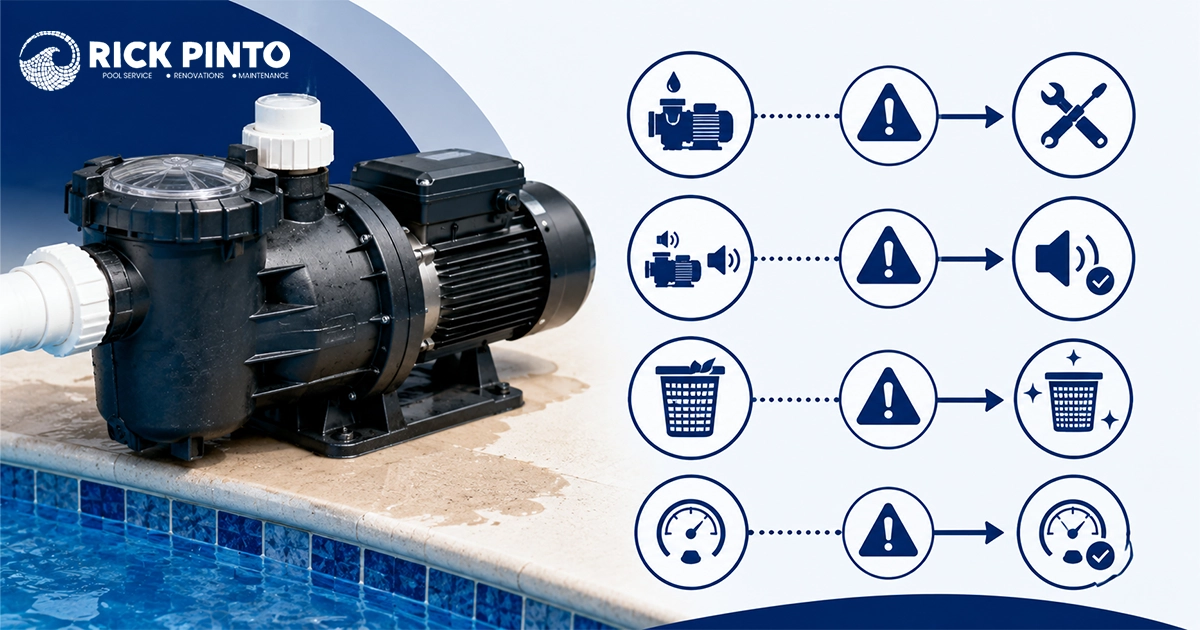
A few warning signs tend to show up before a pump fails completely. Weak water flow at the returns, water that looks cloudier than usual, a motor that feels hot to the touch, unusual noises like grinding or squealing, and a pump that will not prime are all early indicators. Catching these signs early often means the difference between a simple repair and a full pump replacement.
Common Swimming Pool Pump Problems and Solutions
Pool Pump Not Working at All
When a pool pump is not working at all, the cause is often electrical. A tripped breaker, a blown fuse, a failed capacitor, or a bad wiring connection can all prevent the motor from starting. In some cases, the motor itself has simply seized after years of use. A technician can test the motor and electrical components to pinpoint the exact issue.
Pump Is Running but Not Pumping Water
If the pump runs but water is not circulating, the problem is usually related to priming or airflow. A clogged skimmer basket, a low water level, an air leak on the suction side, or a worn impeller can all prevent the pump from moving water properly, even while the motor sounds fine.
Loud or Unusual Noises
Grinding, squealing, or rattling noises typically point to worn bearings inside the motor. Left unaddressed, worn bearings can lead to complete motor failure. A humming noise with no water movement often signals a seized impeller or motor shaft.
Leaking Around the Pump
Leaks usually come from a worn shaft seal, a cracked pump housing, or loose fittings at the union connections. Small leaks can often be repaired by replacing the seal, while a cracked housing typically means the pump needs to be replaced.
Pump Turns On and Off Repeatedly (Tripping Breaker)
A pump that keeps tripping the breaker is usually dealing with a motor that is drawing too much current, often due to a failing capacitor, a shorted winding, or a motor that is overheating from restricted airflow or a seized bearing.
Should You Repair Your Pool Pump or Replace It Instead?
When Repair Makes Sense
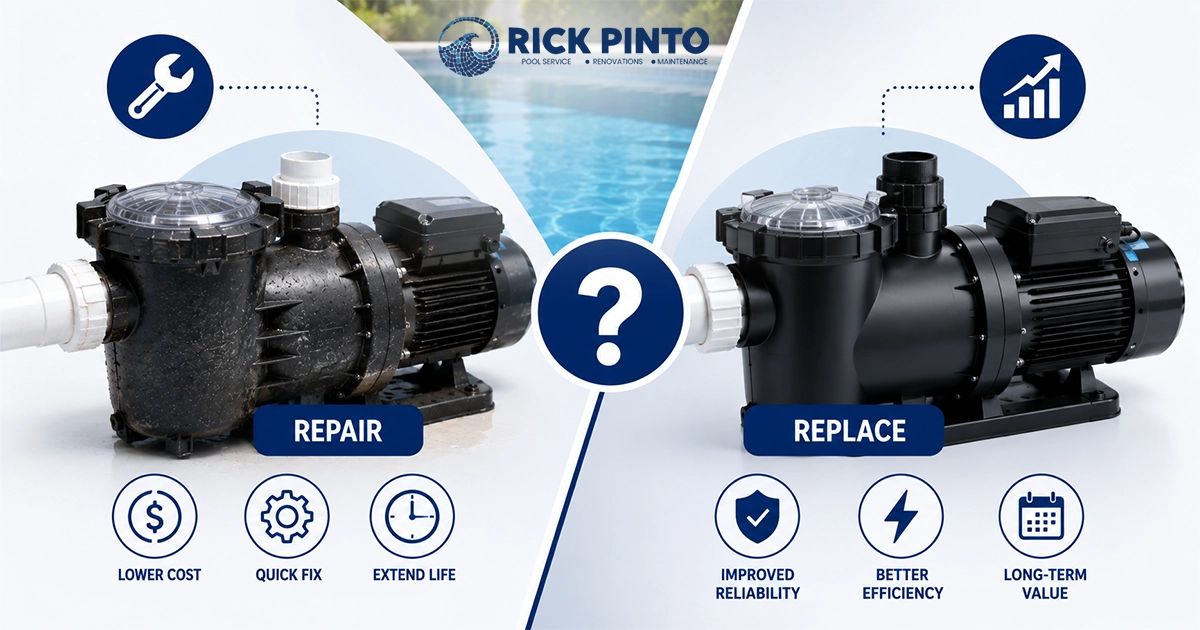
Repair is generally the better choice when the pump is under about five years old, the failure involves a single, identifiable part such as a seal, capacitor, or impeller, and the motor housing itself is in good condition. In these cases, pool pump repair services can often have the system running again within a day.
When Replacement Makes Sense
Replacement tends to make more sense for pumps older than eight to ten years, pumps with a cracked housing, or pumps that have needed multiple repairs within a short period. If a pump is a single speed model, replacing it with a variable speed pump can also significantly reduce energy costs, which often offsets much of the upfront cost of swimming pool pump replacement over time.
Cost Comparison: Repair vs Replacement
A single part repair, such as a new seal or capacitor, is usually far less expensive than a full pump replacement. However, if a pump has already needed two or three repairs within a year or two, the combined cost of those repairs can approach or exceed the cost of a new, more efficient pump. A technician offering pool pump replacement services can typically walk through the numbers for your specific situation before you decide.
How Professional Pool Pump Repair Services Diagnose the Problem
A qualified technician will typically start by checking the electrical supply and breaker, then move on to testing the motor, capacitor, and wiring. From there, they will inspect the impeller, shaft seal, and housing for wear, cracks, or blockages. This kind of structured diagnosis helps avoid guesswork and ensures the actual root cause gets fixed, rather than just the symptom that is currently visible.
Choosing the Right Pool Pump if You Do Replace It
If replacement turns out to be the right call, it is worth considering a variable speed pump over a traditional single speed model. Variable speed pumps run at lower speeds for routine filtration and only ramp up when needed, which can cut pump related energy costs substantially over a year. Sizing also matters. A pump that is too large or too small for your pool’s plumbing and filtration system will not perform efficiently, so it is worth having a professional confirm the right size and horsepower for new pool pump installation rather than guessing based on the old unit alone.
How to Prevent Future Pool Pump Problems
Regular maintenance goes a long way toward avoiding early pump failure. Keep the skimmer and pump baskets clear of debris, monitor water chemistry to prevent scale buildup inside the pump housing, and listen for early warning noises rather than waiting for a full breakdown. Scheduling periodic equipment checks as part of routine pool equipment repair and maintenance can catch small issues long before they turn into a full pump replacement.
FAQs
Why is my pool pump not working?
A pool pump that is not working is often caused by a tripped breaker, a seized motor, a clogged impeller, a failed capacitor, or a wiring issue, and a technician can usually diagnose the exact cause quickly.
Is it cheaper to repair or replace a pool pump?
Repair is usually cheaper for pumps under five years old with a single failed part, while replacement often makes more financial sense for older pumps or pumps with repeated failures, since a new pump can also lower energy costs.
How long does a pool pump usually last?
Most residential pool pumps last around eight to twelve years with regular maintenance, though this can vary based on usage, water chemistry, and pump quality.
What are signs a pool pump needs to be replaced?
Frequent repairs, rising energy bills, a motor that runs hot or loud, visible corrosion, and a pump older than eight to ten years are all signs that replacement may be more cost effective than continued repair.
Final Thoughts
Whether a swimming pool pump repair or a full replacement is the right call really comes down to the pump’s age, the type of failure, and how often problems have come up in the past. A single failed part on a newer pump is usually worth fixing. A pump that keeps breaking down or is already past its expected lifespan is usually better replaced, especially with more efficient variable speed options now available.
If your pool pump is not working the way it should, schedule pool pump repair services with Rick Pinto Pools, or ask about swimming pool pump replacement options if it is time for something new.



Leave a Reply