

Salt Water Pool Conversion: Complete Guide for Pool Owners
If you’re tired of red eyes, bleached swimsuits, and the constant chore of handling chlorine tablets, you’ve probably wondered whether a saltwater pool conversion is worth it. It’s one of the most popular upgrades pool owners make, and for good reason: it simplifies maintenance while still keeping your water clean and safe.
This guide walks you through exactly what’s involved when you convert a chlorine pool to salt, what benefits to expect, and what the process actually looks like from start to finish.
What Is a Saltwater Pool Conversion?
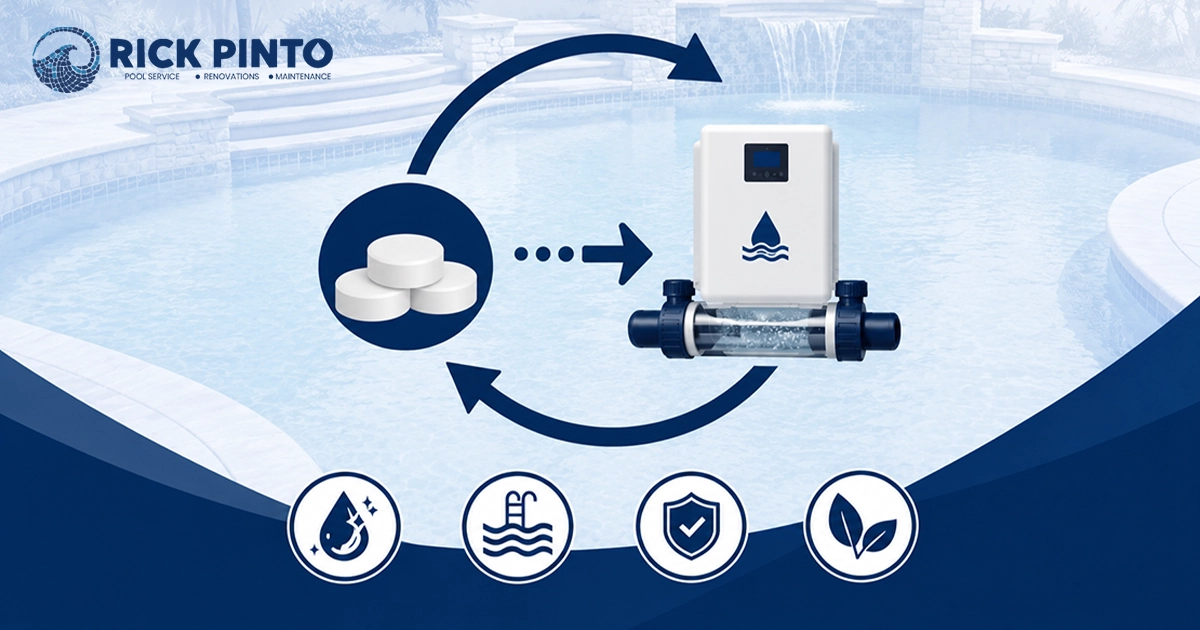
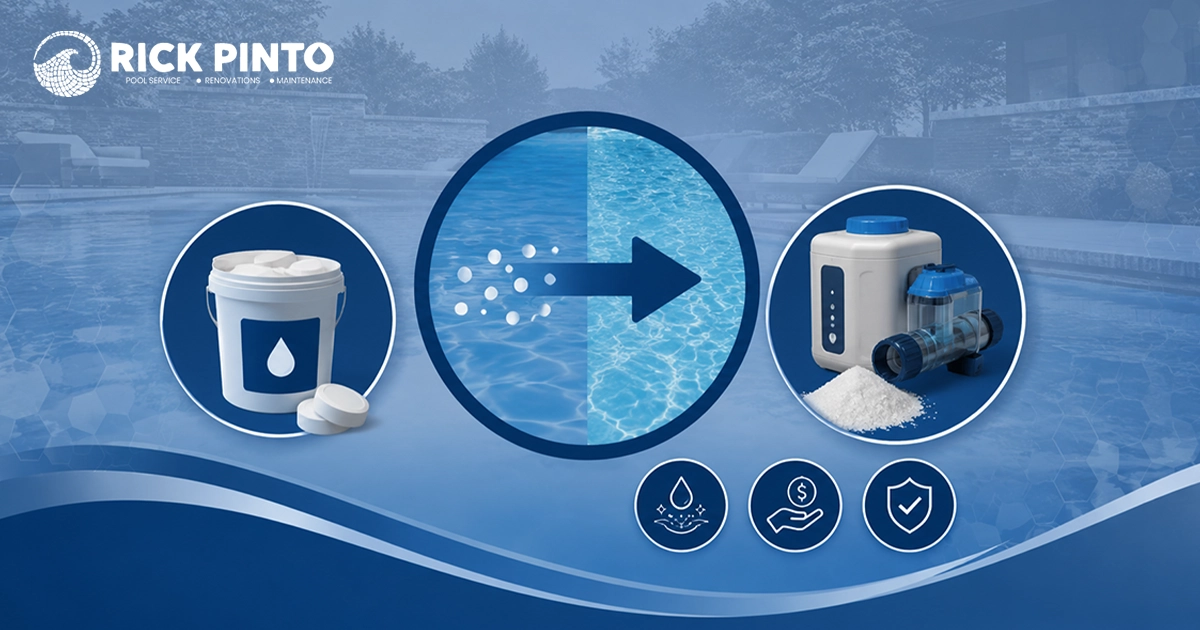
A saltwater pool conversion doesn’t mean removing chlorine from your pool altogether. Instead, it means installing a salt chlorine generator, a system that uses dissolved salt in the water to produce chlorine naturally through a process called electrolysis. Your pool still has chlorine in it, but you’re no longer buying, storing, or manually adding it yourself.
This is why so many homeowners describe the switch from chlorine to saltwater conversion as trading manual upkeep for a self-sustaining system that does the work for you.
Benefits of Converting to a Salt Water Pool
Softer, gentler water. Saltwater pools have a much lower salt concentration than the ocean, similar to tears, which means less irritation for eyes, skin, and hair.
Reduced chemical handling. Once your system is installed, you’re no longer lifting heavy chlorine buckets or measuring out tablets every week.
More consistent chlorine levels. A salt system continuously generates chlorine at a steady rate, which helps prevent the spikes and dips that come with manual dosing.
Less damage to swimsuits and pool gear. Traditional chlorine pools are notoriously hard on fabric and hair color. Saltwater systems are far gentler over time.
Lower long-term chemical costs. While there’s an upfront investment, most owners spend significantly less on pool chemicals year over year after they convert to a salt water pool.
Of course, no system is entirely maintenance-free. Salt cells need periodic cleaning and eventually need replacing, and you’ll still need to monitor your water chemistry regularly. A saltwater system reduces the daily hassle, but it doesn’t eliminate pool care altogether.
How the Chlorine to Saltwater Conversion Process Works
Here’s what a professional conversion typically involves:
- Pool inspection and equipment assessment. Before anything else, a technician checks your existing plumbing, pump, filter, and pool surface to confirm they can support a salt system. Certain metal fixtures, ladders, or heaters may need attention beforehand, since saltwater can be corrosive to unprotected metal over time.
- Installing the salt chlorine generator. This is the heart of the conversion. The system is plumbed into your existing equipment, usually after the filter and heater, and wired to a control panel that lets you adjust chlorine output.
- Adding pool grade salt. Once the generator is installed, the correct amount of salt is added directly to the pool. The exact amount depends on your pool’s volume and the manufacturer’s recommended salt level, typically in the 3,000 to 3,500 parts per million range.
- Balancing water chemistry. Before the system is switched on, pH, alkalinity, and stabilizer levels are tested and adjusted so the new system starts off on the right foot.
- System startup and calibration. The generator is turned on and calibrated to produce the right amount of chlorine for your pool size and usage. Most systems take a few days to fully dissolve the salt and reach optimal output.
- Final walkthrough. A good contractor will walk you through how to read your system’s display, when to expect cell cleanings, and what regular testing routine to follow going forward.
How Long Does It Take to Convert a Chlorine Pool to Salt?
For most residential pools, the physical installation takes a single day. However, it can take one to two weeks for the salt to fully dissolve and for chemistry to stabilize, especially in larger pools. Your pool remains swimmable throughout this process.
Is a Saltwater Pool Conversion Right for You?
A saltwater conversion tends to be a great fit if you:
- Want lower long-term maintenance and fewer chemical purchases
- Have sensitive skin, eyes, or allergies that react to traditional chlorine
- Own a pool with equipment and surfaces in good working condition
- Plan to keep the pool for several more years to make the investment worthwhile
It may be worth holding off if your pool has aging metal fixtures, an outdated liner, or plumbing issues that should be addressed first, since these can be affected by salt exposure if not properly treated beforehand.
Why Work With a Professional for Your Conversion
A saltwater pool conversion involves more than dropping salt into the water. Sizing the generator correctly, protecting metal components, and dialing in your chemistry all require experience. Getting any of these wrong can lead to corrosion, inconsistent chlorine levels, or a system that underperforms for your pool size.
At Rick Pinto Swimming Pools, our certified technicians have been installing and repairing salt water systems throughout Fairfield County, CT, and Westchester County, NY for more than 40 years. We handle every step of the process, from equipment assessment through startup and calibration, so your new system is set up correctly the first time.
Ready to Upgrade Your Pool with a Salt System?
If you’re ready to make the switch from chlorine to a saltwater pool, our team can walk you through the process, answer your questions, and handle the installation from start to finish. Contact Rick Pinto Swimming Pools today to schedule a consultation and find out if a saltwater pool conversion is the right upgrade for your home.



Leave a Reply