

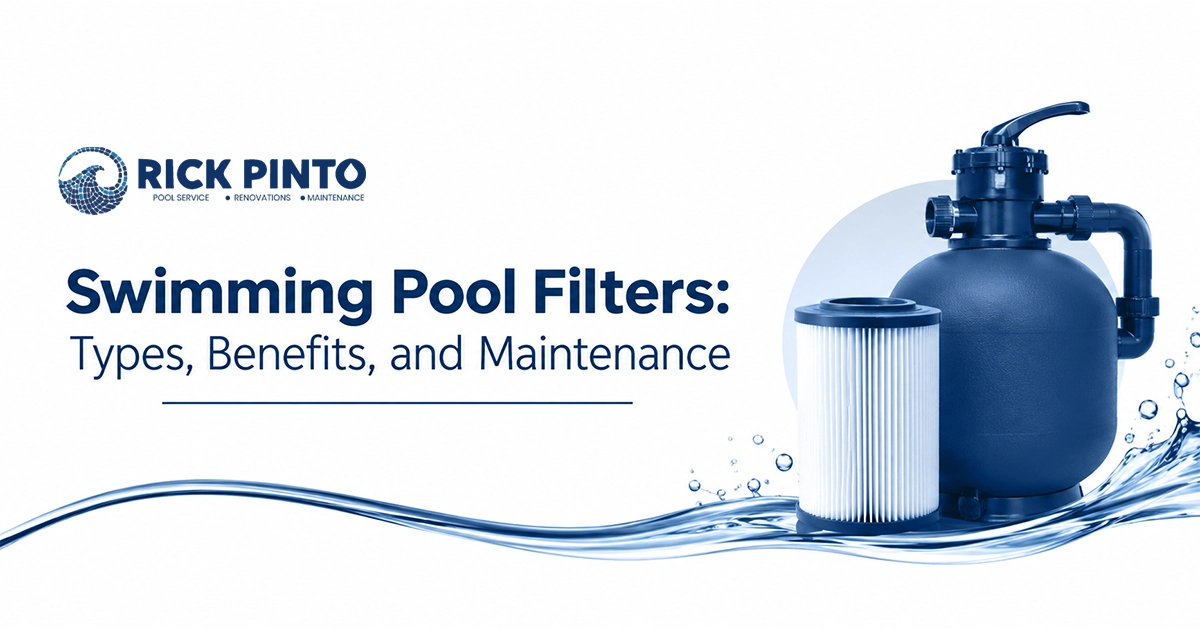
Swimming Pool Filters: Types, Benefits, and Maintenance
A sparkling pool doesn’t happen by accident. Behind every clear, inviting swim is a hardworking swimming pool filter quietly removing dirt, debris, oils, and microscopic particles around the clock. Choosing the right pool filter, and looking after it, is one of the most important decisions a pool owner can make.
In this guide, we break down the main types of pool filter, the benefits each one offers, and the maintenance habits that keep your water clean, clear, and healthy all season.
What Does a Swimming Pool Filter Do?
Your pool pump pulls water from the pool and pushes it through the filter. As water passes through the filter media, debris and particles are trapped, and clean water returns to the pool. This cycle of pool water filtration works together with sanitizers like chlorine to keep water safe.
Without a properly working filter, you would see cloudy water, algae growth, higher chemical use, and an increased risk of skin, eye, and ear irritation for swimmers.
The 3 Main Types of Pool Filter
There are three common types of pool filter used in residential and commercial pools. Each has its own strengths.
1. Sand Filters
Sand filters use specially graded sand to trap debris as water flows through the tank.
Benefits:
- Affordable upfront cost
- Simple to operate and very durable
- Sand typically lasts 5 to 7 years before replacement
Things to consider: Sand filters capture particles down to roughly 20 to 40 microns, so very fine particles can pass through. They also use water during backwashing.
2. Cartridge Filters
Cartridge filters use a pleated polyester element that traps debris on its surface.
Benefits:
- Filters finer particles (about 10 to 20 microns)
- No backwashing required, so less water waste
- Low energy use and quiet operation
Things to consider: Cartridges need to be removed and rinsed regularly, and replaced every 2 to 3 years depending on use.
3. Diatomaceous Earth (DE) Filters
DE filters use a fine powder made from fossilized diatoms, coated over internal grids, to capture even the tiniest particles.
Benefits:
- The finest filtration available (down to about 3 to 5 microns)
- Produces exceptionally sparkling water
Things to consider: DE filters cost more, require more hands-on care, and the powder must be added after each backwash. Disposal of used DE should follow local regulations.
Quick Comparison
| Filter Type | Filtration Level | Maintenance Effort | Upfront Cost | Best For |
|---|---|---|---|---|
| Sand | 20–40 microns | Low | Low | Budget-minded, low-effort owners |
| Cartridge | 10–20 microns | Medium | Medium | Water savings, finer filtration |
| DE | 3–5 microns | High | Higher | Maximum clarity, hands-on owners |
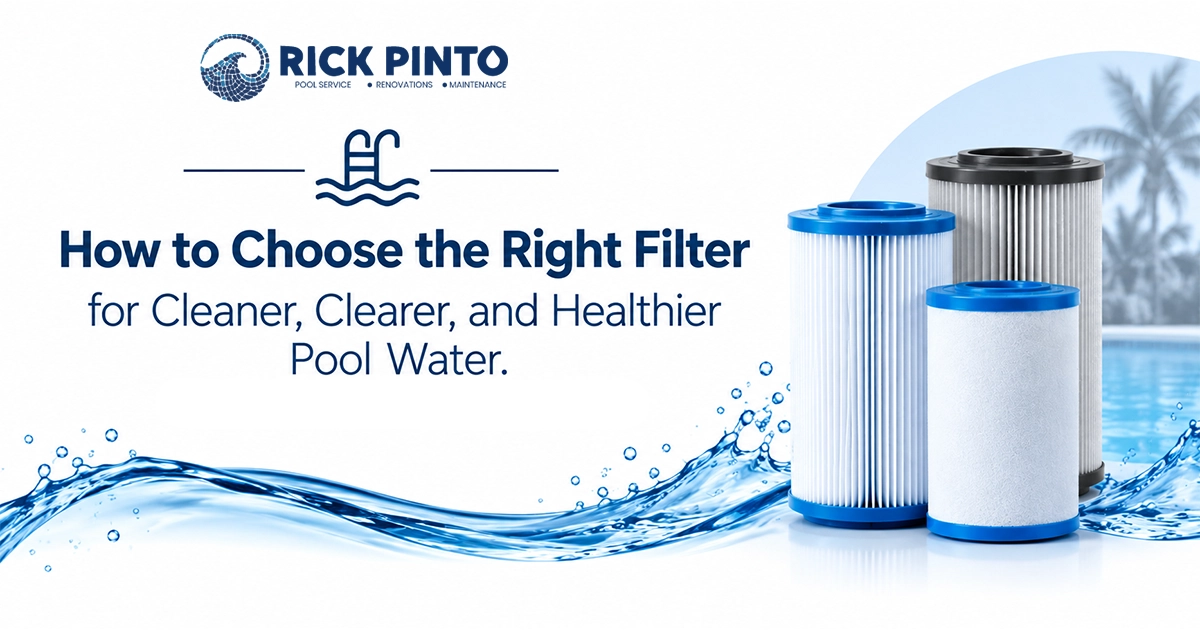
How to Choose the Right Filter
The best filter depends on your pool and lifestyle. Keep these factors in mind:
- Pool size and volume: Your filter must be able to turn over your full pool volume within roughly 8 to 12 hours. An undersized filter will struggle constantly.
- Pump compatibility: Flow rates of the pump and filter should be matched for efficiency.
- Local conditions: Heavy leaf fall, dust, or high swimmer traffic may call for finer filtration.
- Budget and effort: Consider both upfront price and long-term upkeep.
- Water-saving goals: Cartridge filters are a strong choice where water conservation matters.
Not sure which option fits? A pool professional can assess your setup and recommend the right size and type.
Why Professional Pool Filter Installation Matters
Even the best equipment underperforms if it’s installed incorrectly. Proper pool filter installation ensures correct plumbing connections, the right flow rate, secure fittings, and pressure readings within the safe range. It also protects your pump from unnecessary strain and helps your system last longer.
If you’re upgrading an old unit or building a new pool, professional installation saves time, prevents leaks, and avoids costly repairs later.
Pool Filter Maintenance: Keep It Running Like New
Consistent pool filter maintenance is the secret to long equipment life and clear water. Here is a practical routine, whether you own a sand, cartridge, or DE unit.
Weekly Habits
- Check the pressure gauge. A rise of 8 to 10 PSI above the clean starting pressure usually means it’s time to clean the filter.
- Empty the skimmer and pump baskets so debris doesn’t overload the filter.
- Make sure water chemistry is balanced; poor balance can scale or clog filter media.
By Filter Type
- Sand: Backwash when pressure rises, then rinse until the sight glass runs clear. Replace sand every 5 to 7 years.
- Cartridge: Remove and hose down the pleats every 4 to 6 weeks (more often in heavy use). Do a deeper chemical soak once or twice a season, and replace worn cartridges.
- DE: Backwash when pressure climbs, recharge with fresh DE, and deep clean the grids once or twice a year.
Seasonal Care
- Do a thorough cleaning before opening the pool for the season.
- Inspect O-rings, gaskets, and valves for cracks or leaks, and lubricate seals as needed.
- Drain and winterize the filter properly in cold climates to prevent freeze damage.
Good swimming pool filter care is inexpensive compared with the cost of replacing a neglected system.
Signs Your Pool Filter Needs Attention
- Persistently cloudy or green water despite correct chemicals
- Pressure gauge reading far above or below normal
- Weak return jets or reduced water flow
- Frequent backwashing needed in a short time
- Visible cracks, leaks, or sand blowing back into the pool
If you notice any of these, it’s time for an inspection or professional service.
Final Thoughts
Your filter is the heart of your pool’s circulation system. Understanding the types of pool filter available, choosing one that fits your pool, and committing to regular care will give you cleaner, clearer, and healthier water for years to come.
Ready for expert advice, a new system, or a service visit? Contact the team at Rick Pinto Pools for reliable guidance on filter selection, installation, and upkeep.
Frequently Asked Questions
What is the best swimming pool filter?
There’s no single best option. Sand filters are low-cost and easy, cartridge filters balance clarity and water savings, and DE filters deliver the finest filtration.
How long should I run my pool filter each day?
Most pools need 8 to 12 hours of circulation daily, though this varies with pool size, season, and usage.
How often should I clean my pool filter?
Clean it when the pressure gauge rises 8 to 10 PSI above the clean reading, and perform a routine check at least weekly.
Can I upgrade my filter type later?
Yes. A professional can confirm that your pump and plumbing are compatible before switching types.



Leave a Reply