

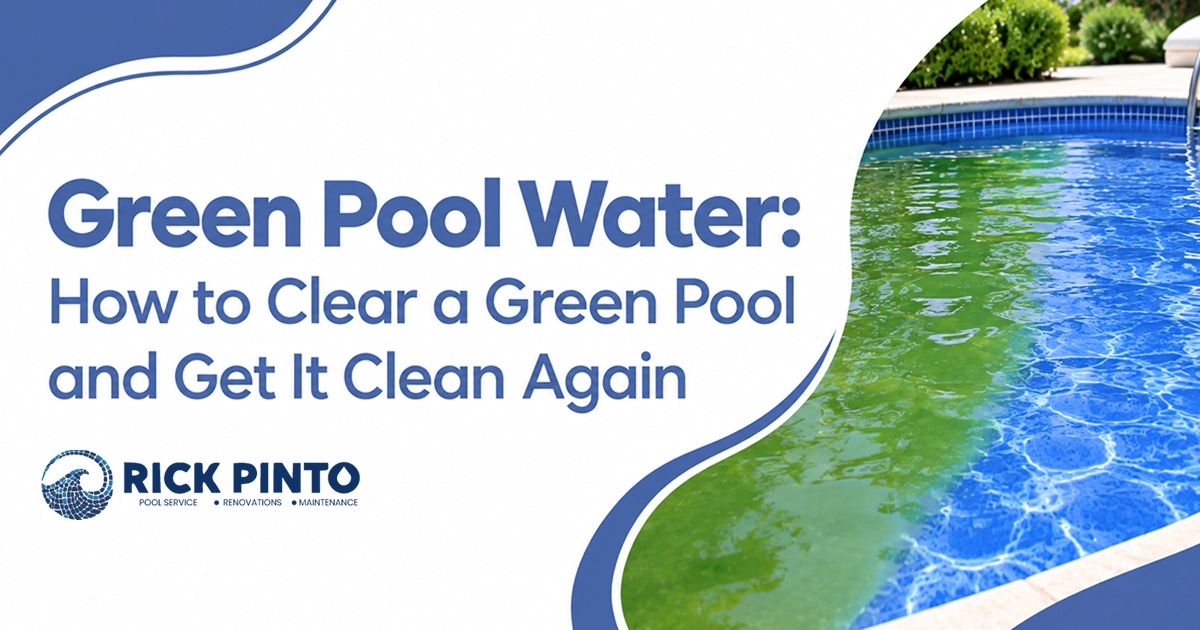
Green Pool Water: How to Clear a Green Pool Fast
Opening the pool to find it’s turned green overnight is one of the more discouraging moments of pool ownership. The good news is that green pool water is almost always fixable without draining and plastering. The less good news is that clearing it properly takes more than dumping in extra chlorine and hoping for the best.
This guide covers what actually causes a pool to turn green, the step by step process for green pool cleanup, and how to know when the problem is bigger than a DIY weekend project.
What Causes Green Pool Water?
Green pool water is almost always algae, though the exact cause behind the algae bloom can vary. Understanding the trigger helps you prevent it from happening again once your pool is clear.
1. Low or Depleted Sanitizer Levels
Chlorine (or the chlorine generated by a salt system) is what keeps algae spores from taking hold. When sanitizer levels drop too low, even for a day or two during hot weather or heavy sun exposure, algae can multiply rapidly and turn a clear pool green within 24 to 48 hours.
2. Poor Circulation or Filtration
Algae thrives in areas with weak water movement, like corners, steps, or behind ladders. A pool with a clogged filter, undersized pump, or short filtration run time gives algae the stagnant conditions it needs to spread before your system can catch up.
3. Imbalanced pH or Alkalinity
When pH climbs too high, chlorine becomes far less effective at killing algae and bacteria, even if your sanitizer reading looks technically adequate on a test strip. This is one of the most overlooked causes of a green pool turning up despite “normal” chlorine levels.
4. Heavy Rain or Runoff
Rainwater dilutes chlorine levels and can introduce organic debris and even algae spores directly into the pool, especially after a storm that causes yard runoff to reach the water.
5. Extended Periods Without Maintenance
Vacation, a broken pump, or simply falling behind on testing for a week or two is one of the most common reasons pools turn green. Algae doesn’t need much of a window once sanitizer and circulation both lapse at the same time.
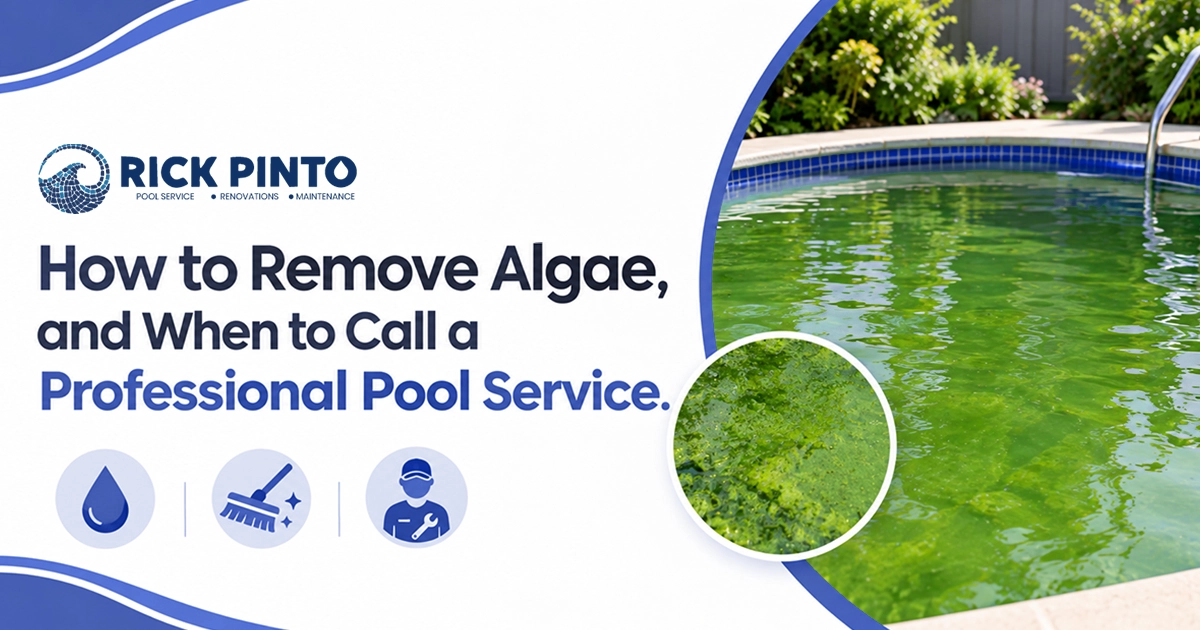
How to Clear a Green Pool
Clearing green pool water follows a fairly predictable process. Skipping steps or rushing the order tends to prolong the problem rather than solve it faster.
Step 1: Test and Balance Your Water
Before adding any chemicals to fight algae, test pH, total alkalinity, and stabilizer levels. Algaecides and shock treatments work far more effectively once your water chemistry is in the proper range, so this step isn’t optional, even though it’s tempting to skip straight to shocking the pool.
Step 2: Brush the Pool Thoroughly
Use a pool brush to scrub walls, steps, corners, and any other surface where algae tends to cling. Brushing breaks up algae colonies so shock treatment can reach and kill them more effectively, rather than just treating the free floating algae in open water.
Step 3: Shock the Pool
Add a chlorine shock at a dose appropriate for the severity of the algae bloom. Light green water typically needs a standard shock treatment, while dark green or black tinted water often requires a double or triple dose to fully overwhelm the algae growth. Always follow product instructions and add shock in the evening, since sunlight breaks down chlorine quickly.
Step 4: Run the Filter Continuously
Keep your filtration system running 24 hours a day until the water clears. This is not the time to run your pump on a reduced schedule. Continuous filtration is what actually removes dead algae from the water once the shock treatment has done its job.
Step 5: Brush Again and Vacuum
As algae dies, it often settles to the bottom of the pool. Brush the pool again after 12 to 24 hours, then vacuum any settled debris, either manually or to waste if your system supports it, to avoid recirculating dead algae back through the filter.
Step 6: Retest and Repeat if Necessary
Check chlorine, pH, and alkalinity again once the water starts clearing. Severe algae blooms sometimes need a second round of shock and brushing before the water fully clears from green to cloudy to clean.
Step 7: Clean or Backwash the Filter
Once the pool is clear, clean or backwash your filter thoroughly. A filter that’s been working through a major algae bloom will likely be loaded with debris, and leaving it dirty can lead to reduced performance or a repeat cloudy water issue soon after.
How Long Does It Take to Clear a Green Pool?
Timeline depends heavily on how severe the algae bloom is:
- Light green water: often clears within 24 to 48 hours with one shock treatment and continuous filtration
- Medium to dark green water: typically takes 2 to 4 days, sometimes requiring a second shock treatment
- Black or very dark green water: can take a week or more and often benefits from professional grade treatment products or equipment
Patience matters here. Adding excessive chemicals to speed up the process rarely works and can throw off your water balance even further.
When to Call a Professional Pool Service
DIY treatment works well for most green pool situations, but a few scenarios are worth handing off to a professional:
- The pool has been green for an extended period (weeks rather than days), since prolonged algae growth can stain plaster or surfaces
- You’ve shocked the pool multiple times with no improvement, which may point to equipment issues rather than a simple chemistry problem
- Your pump, filter, or salt cell isn’t functioning properly, since chemical treatment alone won’t fix a mechanical issue
- You’re dealing with black algae, which forms root systems in plaster and typically requires specialized treatment
- You simply don’t have the time or equipment to manage several days of testing, brushing, and monitoring
A professional pool service can also diagnose whether a recurring algae problem points to a deeper issue, like a failing pump, an undersized filter, or a salt cell that needs cleaning or replacement.
Preventing Green Pool Water Going Forward
Once your pool is clear, a few habits make a repeat bloom far less likely:
- Test water at least twice a week, more often during hot weather or heavy pool use
- Run your filter for an adequate daily cycle, typically 8 to 12 hours depending on pool size and pump capacity
- Maintain consistent sanitizer levels rather than letting them swing low between treatments
- Brush the pool weekly, even when the water looks clear, since early algae growth often isn’t visible yet
- Add a maintenance dose of algaecide during particularly hot or heavy use stretches as a preventive measure
Frequently Asked Questions
Why did my pool turn green overnight?
A sudden green pool is almost always caused by a rapid algae bloom triggered by low sanitizer levels, heavy rain, or several days without adequate filtration and testing.
How do I clean a green pool myself?
Clearing a green pool at home involves balancing water chemistry, brushing all surfaces, shocking the pool, running the filter continuously, and repeating brushing and vacuuming until the water clears.
Is it safe to swim in green pool water?
No, green pool water indicates active algae growth and often depleted sanitizer levels, both of which can allow bacteria to thrive. Swimming should wait until the water is fully clear and properly balanced.
How much shock do I need to clear a green pool?
Dosage depends on severity. Light green water typically needs a standard shock treatment, while dark green or black tinted water often requires a double or triple dose, always following the product’s specific instructions.
Can a green pool damage my equipment?
Extended algae growth can strain your filter and reduce circulation efficiency, and severe cases can stain plaster or vinyl surfaces if left untreated for too long, which is one reason prompt treatment matters.
When should I call a professional instead of treating it myself?
If the pool has been green for an extended period, repeated shock treatments aren’t working, you suspect equipment problems, or you’re dealing with black algae, it’s worth calling a professional pool service rather than continuing DIY treatment.
Final Thoughts
Green pool water is stressful to discover but almost always correctable with the right sequence of testing, brushing, shocking, and continuous filtration. Understanding what caused the bloom in the first place, whether that’s low sanitizer, poor circulation, or a lapse in maintenance, is just as important as clearing the water, since it’s the key to preventing the same problem from coming back.
If your pool has been green for a while, keeps coming back, or you’d simply rather leave it to a professional, Rick Pinto Pools can assess the cause and get your water clear and balanced again.



Leave a Reply